
For the first time in history NASA’s helicopter fly on Mars

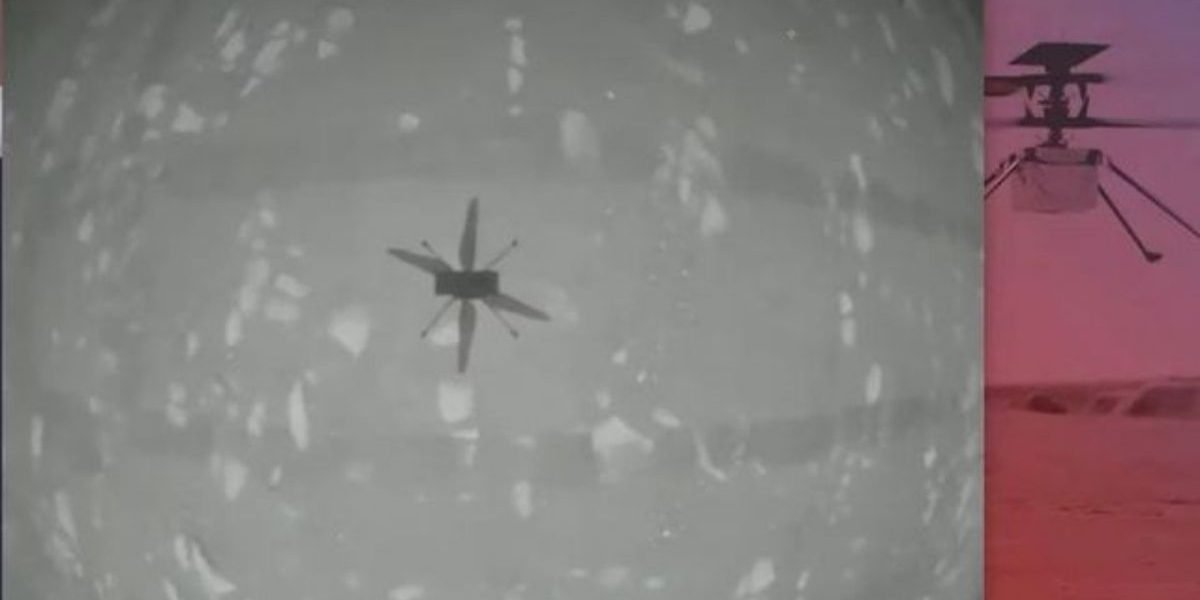
NASA’s smaller than usual robot helicopter Ingenuity played out an effective departure arriving on Mars almost immediately on Monday, accomplishing the originally fueled, controlled trip by an aeroplane over the outside of another planet, the U.S. space organization said.
The twin-rotor whirligig’s introduction on the Red Planet denoted a 21st-century Wright Brothers second for NASA, which said achievement could prepare for new methods of investigation on Mars and different objections in the nearby planetary group, for example, Venus and Saturn’s moon Titan.
Mission chiefs at NASA’s Jet Propulsion Laboratory (JPL) close to Los Angeles burst into commendation and cheers as designing information radiated back from Mars affirmed that the 4-pound (1.8-kg) sun based controlled helicopter had played out its lady 39-second trip as arranged three hours sooner.
Altimeter readings from the rotorcraft showed that it got airborne at 3:34 a.m. EDT (0734 GMT), moved as customized to a tallness of 10 feet (3 meters), at that point drifted consistently set up the absurd surface for a large portion of a moment prior to contacting down securely on its four legs, NASA said.
During NASA’s introduction of the occasion live-streamed from JPL base camp, mission supervisors likewise showed their first pictures from the flight.
A highly contrasting photograph taken by a descending pointing installed camera while the helicopter was overtop showed the unmistakable shadow cast by Ingenuity in the Martian daylight onto the ground just beneath it.
Furthermore, a scrap of shading video film caught by a different camera mounted on NASA’s Mars meanderer Perseverance, stopped around 200 feet away, showed the helicopter in trip against the orange-hued scene encompassing it.
“We would now be able to say that individuals have flown an aeroplane on another planet,” said MiMi Aung, Ingenuity project chief at JPL.
Notwithstanding the flight’s quickness, it denoted a notable accomplishment in interplanetary avionics, occurring on a “runway” 173 million miles from Earth on the floor of an immense Martian bowl called Jezero Crater.
“Ingenuity is the latest in a long and storied tradition of NASA projects achieving a space exploration goal once thought impossible,” acting NASA chief Steve Jurczyk said in a statement. “Today’s results indicate the sky – a least on Mars – may not be the limit.”
The planned flight was delayed for a week by a technical glitch during a test spin of the aircraft’s rotors on April 9. But NASA said it resolved that issue by transmitting a few additional commands to its flight sequence last week.