
California reservoirs half lower than normal as drought fears worsen

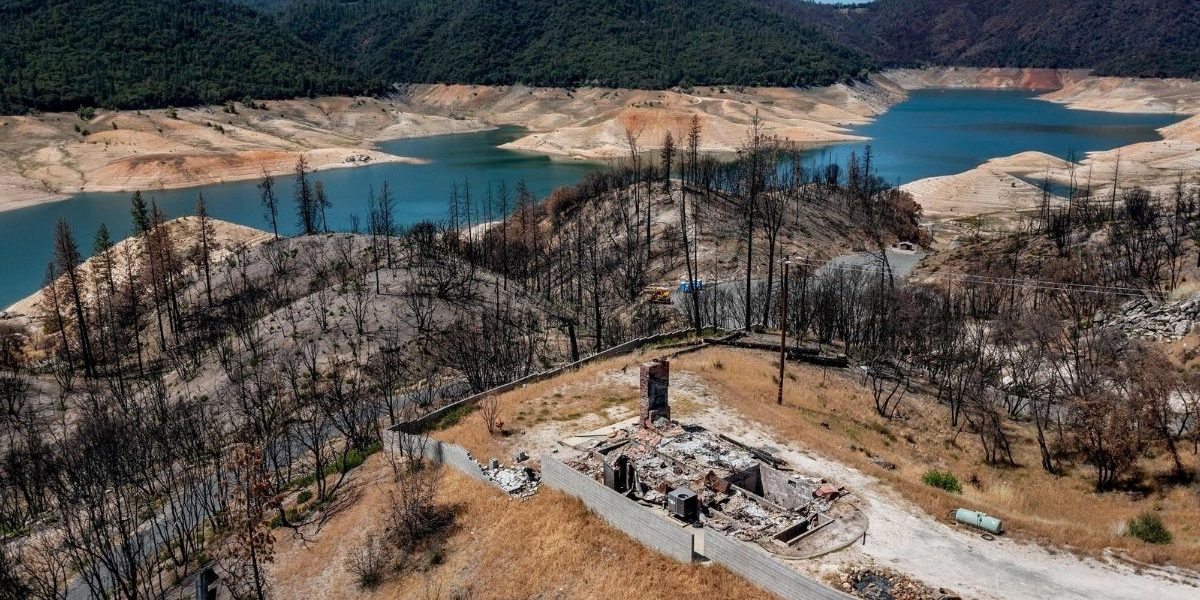
Every year Lake Oroville helps a fourth of the country’s harvests, support jeopardized salmon underneath its gigantic earthen dam and anchor the travel industry economy of a Northern California region that should revamp apparently consistently subsequent to unrelenting out of control fires.
However, presently the strong lake — a key part in an arrangement of water passages and repositories in the dry U.S. West that makes California conceivable — is contracting with amazing velocity in the midst of a serious dry spell, with state authorities anticipating it will arrive at a record low later this late spring.
California, the current year’s is a lot more sizzling and drier than others, dissipating water all the more rapidly from the supplies and the inadequate Sierra Nevada snowpack that feeds them. The state’s in excess of 1,500 supplies is half lower than they ought to be this season, as per Jay Lund, co-overseer of the Center for Watershed Sciences at the University of California-Davis.
Over Memorial Day weekend, many houseboats sat on cinderblocks at Lake Oroville on the grounds that there wasn’t sufficient water to hold them. Darkened trees lined the repository’s lofty, dried banks.
In close by Folsom Lake, regularly clamouring boat moors laid on dry land, their floats cautioning apparition boats to back off. Campers involved dusty riverbanks farther north at Shasta Lake.
Furthermore, everybody needs the water to run hydroelectric force plants that supply a large part of the state’s energy.
In the event that Lake Oroville falls under 640 feet (195 meters) — which it could do by late August — state authorities would close down a significant force plant for simply the second time ever on account of low water levels, stressing the electrical network during the pinnacle interest of the most smoking piece of the late spring.
In Northern California’s Butte County, low water prompts another feeling: dread. The province endured the deadliest U.S. out of control fire in a century in 2018 when 85 individuals kicked the bucket. A year ago, another 16 individuals kicked the bucket in a rapidly spreading fire.
“It causes me to feel like our planet is in a real sense evaporating,” she said. “It causes me to feel somewhat disrupted on the grounds that the drier it gets, the more flames we will have.”
Dry seasons are a piece of life in California, where a Mediterranean-style environment implies the summers are consistently dry and the winters are not generally wet. The state’s repositories go about as an investment account, putting away water in the wet for a very long time to assist the state with enduring the dry ones.
A year ago was the third driest year on record as far as precipitation. Temperatures hit triple digits in a lot of California over the Memorial Day weekend, sooner than anticipated. State authorities were amazed recently when around 500,000 sections of land feet (61,674-hectare meters) of water they were hoping to stream into repositories won’t ever appear. One section of the land foot is sufficient water to supply up to two families for one year.
Low lake levels haven’t prevented travellers from coming yet. With Covid limitations lifting across the state, Wright — the state parks official for Northern California — said participation at most stops in his space is twofold what it regularly is this season.
“Individuals are attempting to reproduce and utilize offices significantly more so (in light of the fact that) they realize they will lose them here in a couple of months,” he said.